Air Raid Precautions Act 1937#
On July 9, 1935, the Home Office issued a circular advising local authorities to create air raid precautions services; the Air Raid Precautions Act followed in December 1937. Local authorities sought volunteers who would be trained in the various ARP services (air raid wardens, in the main).
Volunteers at this time received no uniform; they wore civilian clothes and carried their government-issued respirators (gas masks), which the entire population had been issued beginning in 1938.
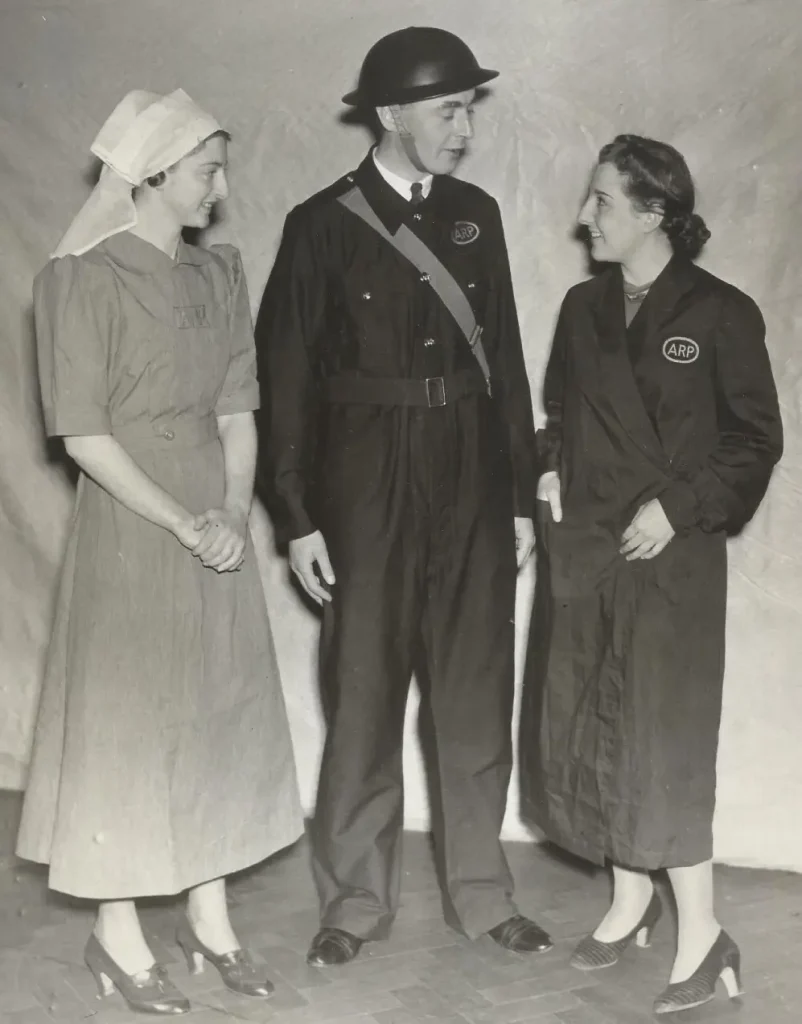
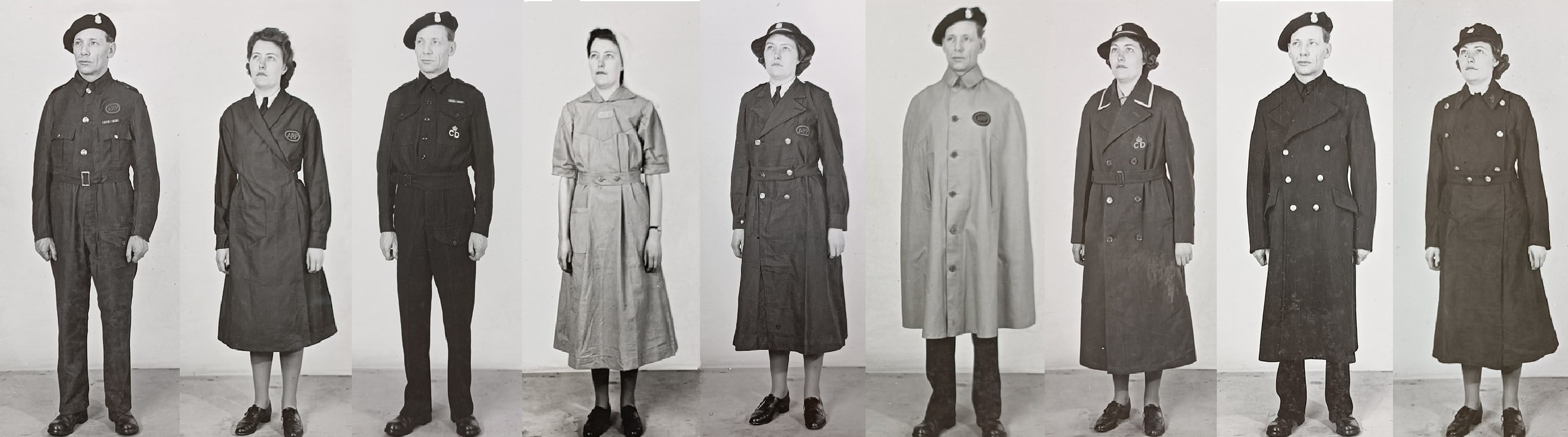
For women there were three main uniforms, the wrapover apron/overall, the warden’s coat and the serge tunic with slacks or skirt. Nurses wore uniforms with an ARP badge and a later CD badge on the front.

ARP lapel badge and Civil Defence armband (introduced July 1940)
ARP volunteers#
Volunteers who completed their training received a silver ARP lapel badge and appointment/warrant card. Some authorities issued volunteers a helmet (khaki coloured that were later painted black closer to the outbreak of war) and an armband.
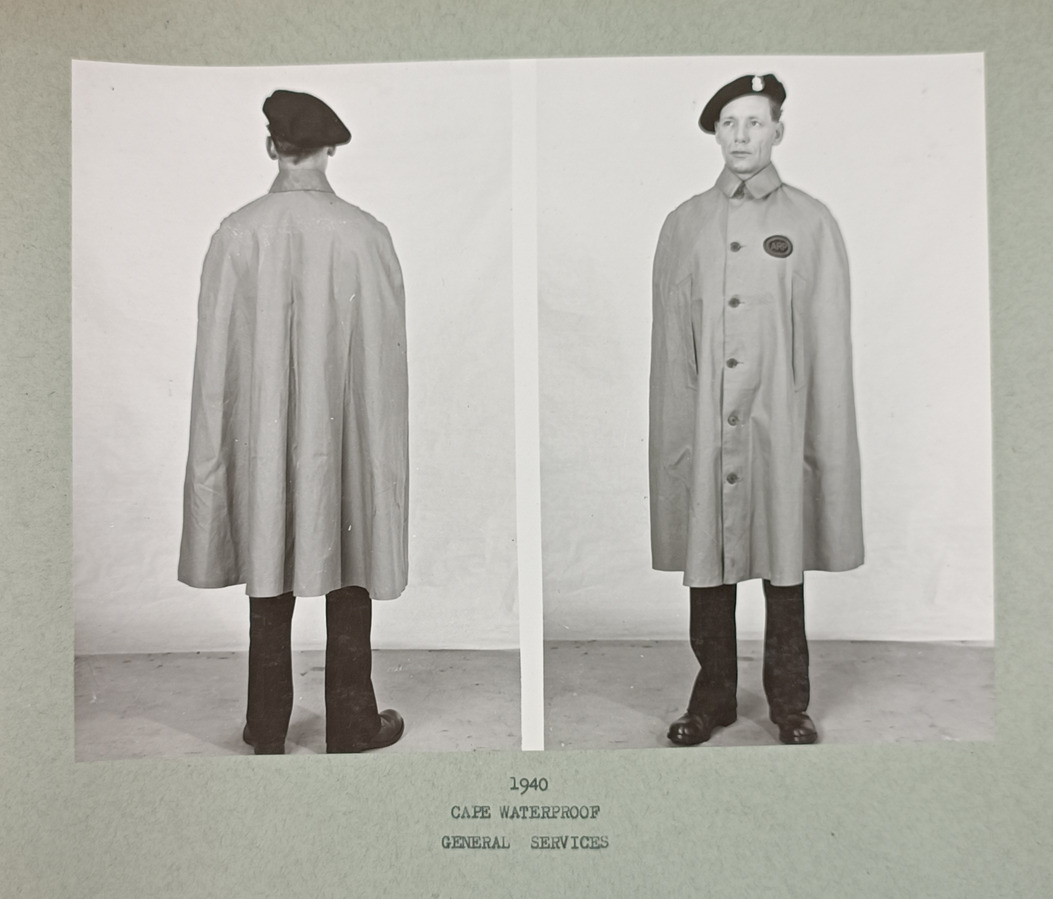
The design of armbands (or armlets) was unregulated at this time and local authorities created whatever designs they wanted, often with the local authority name and role printed on them. Blue Civil Defence armbands featuring a crown and a ‘rainbow‘ device were introduced in July 1940.
Warden’s Service introduces bluette overalls#
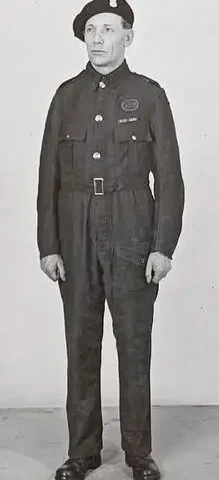
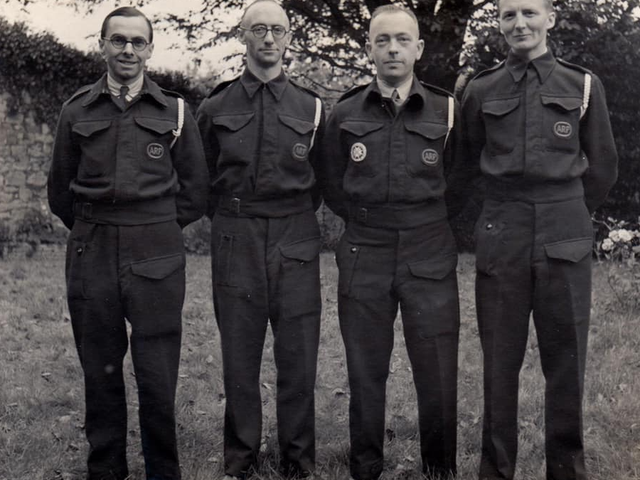
As the threat of war developed, the ARP Wardens’ Service was issued with a more robustly constructed gas mask. Markings on helmets began to appear following the outbreak of the war in September 1939. It was not until October 1939 that uniforms for men slowly filtered through to wardens and associated services; the first being the all-in-one combination suit/overalls made of bluette.
These overalls featured red diamond and bar rank insignia on the lower sleeve (issued up to mid-1941 in the London region) for the Wardens’ Service and red chevrons on the upper arm for the Rescue, Decontamination and Stretcher Parties.
New battledress uniform 1941#
As the Civil Defence General Services (the ARP was rolled into the CD in 1941) became more organised, dark blue battledress (BD) uniform replaced the overalls in 1941 and were issued until the end of the war (though the bluette overalls continued to be worn). A new system of old gold (yellow) rank insignia was also introduced.
The new battledress insignia featured old gold (yellow) bars and rank chevrons to denote a person’s seniority within the various CD services. Certain ranks were also reflected by helmet colour and the use of black bars. Additional insignia was introduced throughout the war for specific roles and attainments (e.g. Incident and Bomb Reconnaissance Officers). A plethora of armbands were also issued.
It should be noted that even when regulations (such as ARP Memo 17) dictated how and where a certain badge should be worn not every person or local group adhered strictly to that dictate. Original WW2 photographs show some variance in where insignia was worn.
The Civil Defence Services during WW2#
The primary objective of the Civil Defence Services was to provide a comprehensive service for the protection of the public, the saving of life and the mitigation of damage to property.
The organisation was based on a system of communication beginning at Wardens’ Posts (and Police Boxes) to the ARP Report & Control Centres, then onto one of twelve Regional Headquarters and finally the Ministry of Home Security War Room based in London.
All services were under the control of a local authority (e.g. Councils of Counties, County Boroughs, Metropolitan and Municipal Boroughs and County Districts). An ARP Controller ran the ARP services for a given local authority and each service within it (Wardens, Rescue, Decontamination. Ambulance etc.) had its own chief officer.